
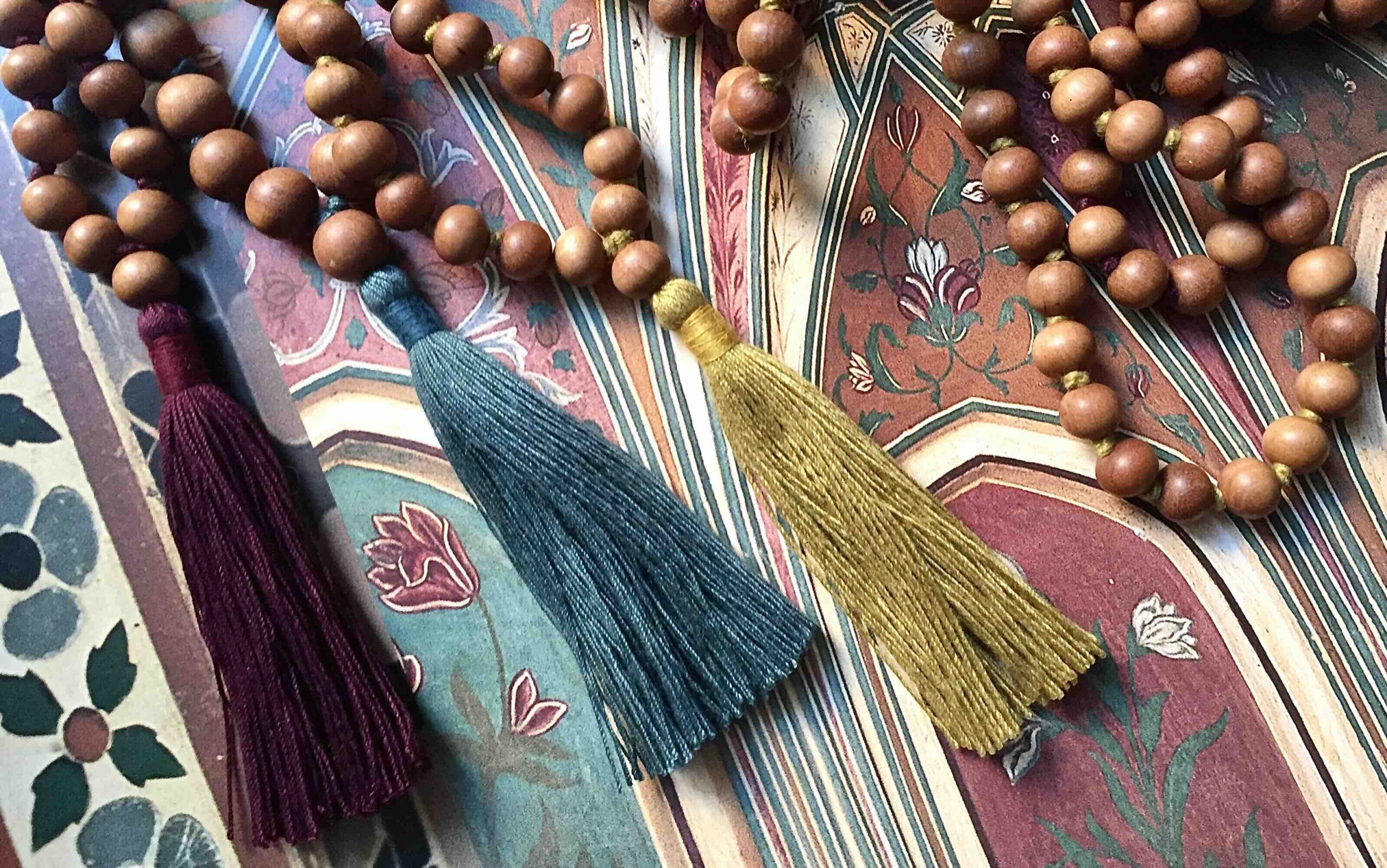
The mala: an ancient tool for meditation and spiritual connection
Discover the meaning of the mala, the symbolism of its 108 beads and the ancient practice of mantra meditation.
A string of beads, a sacred sound, a moment of stillness.
For centuries, the mala has been a companion to yogis, spiritual seekers and meditators across India and beyond. More than a simple necklace, it is a traditional tool used to focus the mind, cultivate awareness and bring rhythm to meditation.
The Sanskrit word mālā means garland. Traditionally used in Hindu spiritual practices, a mala is a string of beads designed to count the repetitions of a mantra, a practice known as japa.
The sacred number 108
A traditional Hindu mala consists of 108 beads, plus one additional bead called the Guru Bead, also known as Meru or Sumeru.
The number 108 holds a special significance in Hinduism and other Indian spiritual traditions. It is associated with the connection between the individual and the universe, and appears throughout ancient philosophy, sacred texts and devotional practices. There are traditionally 108 principal Upanishads and many Hindu deities are celebrated through 108 sacred names.
The Guru Bead marks the completion of one full round of mantra repetitions. It is not counted among the 108 beads and is traditionally never crossed over when beginning another round.
Malas are also sometimes made with 54 or 27 beads, representing half or a quarter of the traditional 108-bead count.
Mantra papa: the practice of repetition
Japa is the Sanskrit word for the repetition of a mantra. A mantra is a sacred sound, word or phrase used to focus the mind and cultivate spiritual awareness.
Repeating a mantra creates a meditative rhythm, allowing the mind to gradually become quieter and less distracted. The repetition can be performed aloud, in a soft whisper or silently within the mind.
Some of the best-known Hindu mantras include Om, the primordial sacred sound; Om Namah Shivaya, dedicated to Lord Shiva; and So Ham, traditionally associated with the rhythm of breathing and often translated as “I am That”.
The mala serves as a physical companion to this practice, allowing the practitioner to concentrate on the mantra rather than counting repetitions.
How to use a mala
Traditionally, japa is practised while sitting comfortably in a quiet place. The mala is placed over the middle finger of the right hand, with the thumb gently moving one bead at a time. In many Hindu traditions, the index finger is kept away from the mala.
Begin with the first bead next to the Guru Bead. Repeat your chosen mantra once, then use your thumb to move to the next bead. Continue until you have completed all 108 repetitions and arrive back at the Guru Bead.
If you wish to continue, traditionally you turn the mala around and begin another round in the opposite direction, without crossing over the Guru Bead.
There is no need to rush. The purpose is not simply to complete a certain number of repetitions, but to bring attention, intention and awareness to each one.
Traditional materials and their meanings
Throughout the centuries, malas have been made from natural materials, each carrying its own cultural and spiritual associations.
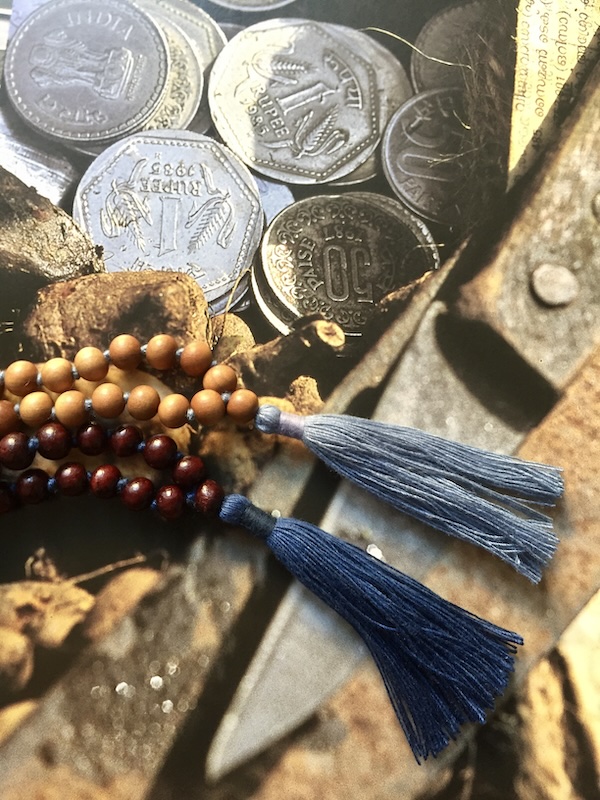
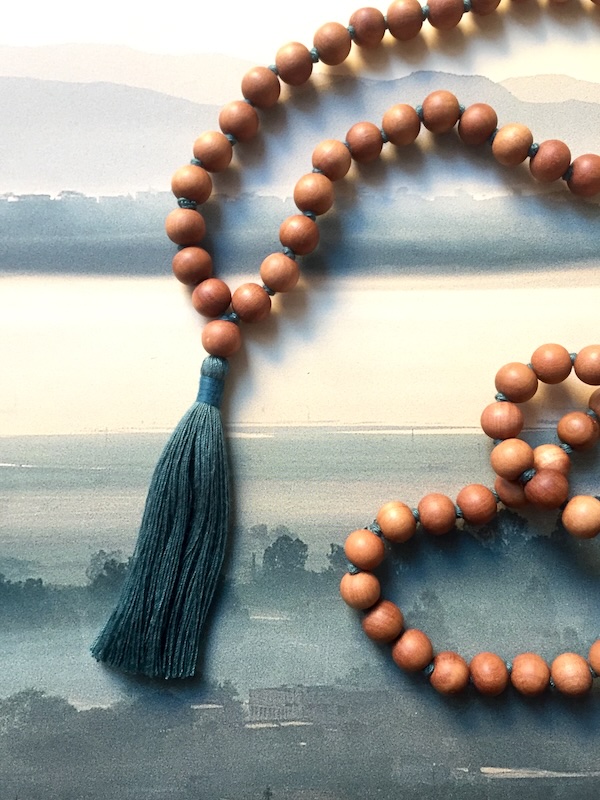
Sandalwood is one of the most traditional materials in India. Appreciated for its delicate natural fragrance and smooth texture, it is associated with purity, tranquillity and devotion. It has long been used in meditation, temple rituals and the creation of sacred objects.
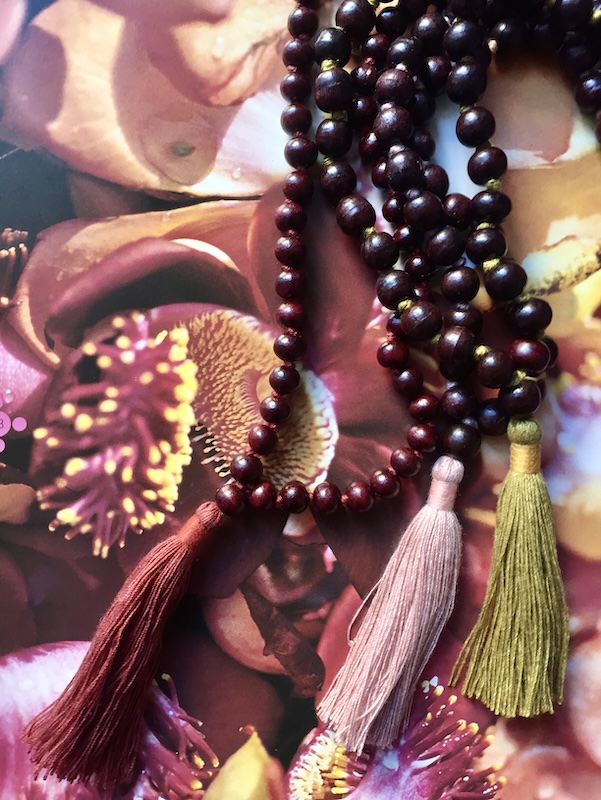
Rosewood is another traditional material, valued for its rich natural colours, beautiful grain and smooth finish. It has a long history in Indian craftsmanship, including the making of prayer beads and meditation malas.
Other traditional materials include Rudraksha seeds, particularly sacred in Shaivite Hindu traditions and associated with Lord Shiva; Tulsi wood, connected with Vishnu and Krishna; as well as Bodhi seeds, lotus seeds, crystals and semi-precious stones.
The choice of material is often connected to the spiritual tradition, the mantra or the personal intention behind the practice.
Hindu and Buddhist malas
Malas are used in both Hinduism and Buddhism, two traditions sharing deep historical and cultural roots in India. Both serve as tools for mantra repetition and meditation, although their construction, materials and symbolic associations can differ.
The Hindu japa mala is particularly associated with devotional practices and mantra meditation, while Buddhist malas are used to count mantras and prayers as part of Buddhist spiritual practice.
More than a string of beads
At Almaviva, we are drawn to objects that carry stories, preserve ancient traditions and invite us to look beyond their material form.
Our traditional malas are made with natural sandalwood and rosewood beads, materials deeply rooted in the spiritual and cultural heritage of India.
Whether used for mantra japa, meditation or simply kept close as a meaningful personal object, a mala can become a reminder to slow down, reconnect with ourselves and bring a little more awareness into everyday life.
A mala is more than a string of beads. It is an invitation to pause, breathe and reconnect with what truly matters.
Explore the Almaviva Mala Collection, a selection of handcrafted malas inspired by ancient traditions, for meditation, spiritual practice and everyday wear.
- Categories:
- Spirituality
